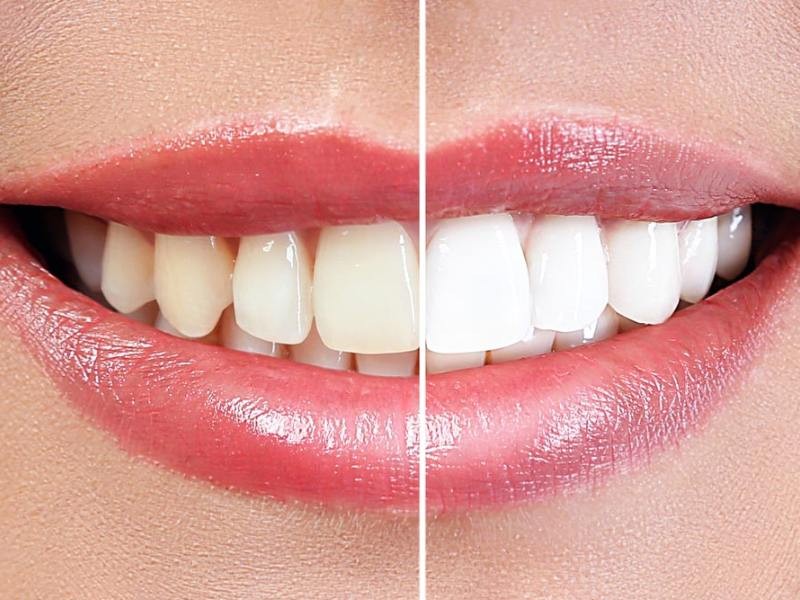
A whiter and brighter smile is one of the most sought after aesthetic desires in modern dental medicine.
dental whitening has become an extremely popular treatment, thanks to technological advances and new protocols that provide more comfort, safety and predictability.
Currently, there are different teeth whitening techniques, adapted to the needs and characteristics of each patient.
However, despite being a relatively simple procedure, clarification should always be performed with professional supervision to ensure safety and good results.:ContentReference [oaicite:0] {index=0}
At Alora Clínic , in Ramada, Odivelas, Lisbon, we carry out personalized teeth whitening treatments, using modern protocols and specialized professional monitoring.
1. What is dental whitening?
dental clarification is an aesthetic procedure that aims to make teeth clearer, reducing pigmentation and stains.
The treatment is carried out through the application of clarifying agents, usually based on:
- hydrogen peroxide;
- Carbamide Peroxide
These substances act inside the tooth, breaking down pigmented molecules responsible for tooth darkness.:ContentReference [oaicite:1] {index=1}
The procedure does not cause significant wear of dental structures when properly performed.
2. How does tooth whitening work?
The brightening gel penetrates the microchannels of the tooth, known as dentinal tubules.
Within these structures, a chemical reaction occurs that releases oxygen, promoting the breakdown of the dark pigments present in the teeth.:ContentReference [oaicite:2] {index=2}
With the reduction of these pigments, the teeth become progressively lighter and brighter.
3. What are the types of teeth whitening?
There are different teeth whitening techniques.
The most used are:
- supervised home clearance;
- clarification done in office;
- combination of the two techniques.
The choice depends on clinical needs, patient habits and professional evaluation.
4. How does supervised home clarification work?
In supervised home clearing, the patient uses custom moldings provided by the dentist.
The brightening gel is applied to moldings and used at home according to clinical guidances.:ContentReference [oaicite:3] {index=3}
Professional follow-up is essential for:
- monitor results;
- control sensitivity;
- guarantee safety in treatment.
5. How does in-office clarification work?
The clearing performed in the office is performed directly by the dentist.
More concentrated lightening agents are used, applied in a controlled and safe way.
Among the advantages stand out:
- faster;
- professional control;
- continuous monitoring;
- highest clinical safety.
6. Does laser clarification still exist?
There is a lot of disclosure about the so-called “laser clarification”.
However, it is currently known that light is not essential for the process of dental clearing.:ContentReference [oaicite:4] {index=4}
The most recent research has shown that modern lightening agents can work effectively without the need for activating light.
Today, the laser is often used for therapeutic purposes, mainly to help reduce tooth sensitivity after clearing.:ContentReference [oaicite:5] {index=5}
7. Is dental cleaning safe?
Yes, as long as it is carried out with professional supervision.
The follow-up of the dentist is essential for:
- evaluate oral health;
- identify contraindications;
- control side effects;
- avoid complications.
Unsupervised treatments can increase the risk of gum damage, intense sensitivity and pulp problems.:ContentReference [oaicite:6] {index=6}
8. What are the most common side effects?
The most common side effect of teeth whitening is temporary tooth sensitivity.:ContentReference [oaicite:7] {index=7}
Patients may feel discomfort when consuming:
- cold drinks;
- hot drinks;
- sweet foods;
- Acidic foods.
In many cases, sensitivity is transient and controllable with desensitizing protocols.
9. Who should not perform dental cleaning?
Not all people are candidates for teeth whitening.
Treatment is not normally indicated for:
- under 18 years of age;
- pregnant;
- breastfeeding women;
- patients with active caries;
- gingival inflammation;
- allergy to gel components;
- systemic diseases without adequate control.:ContentReference [oaicite:8] {index=8}
Clinical evaluation is essential before starting treatment.
10. Does the whitening wear out the teeth?
When done correctly, tooth whitening does not cause significant wear of the dental structure.:ContentReference [oaicite:9] {index=9}
However, improper use of products without supervision can cause enamel damage, gum irritation and pulp complications.
11. Do clarifying products sold unsupervised work?
There are several products marketed for clareamento dentário, such as:
- lightening strips;
- whitening pastes;
- activated charcoal;
- Clarifying mouthwashes.
However, many of these products have limited efficacy or may pose risks when used without professional guidance.:ContentReference [oaicite:10] {index=10}
Clinical monitoring continues to be the safest way to achieve clarification.
12. How long does tooth whitening last?
Durability varies according to the habits and care of the patient.
Some influencing factors include:
- smoking;
- frequent coffee consumption;
- red wine;
- has poor oral hygiene;
- natural aging of teeth.
In many cases, periodic maintenance is recommended to preserve the result obtained.:ContentReference [oaicite:11] {index=11}
13. Can I drink coffee during clarification?
There are still some scientific divergences about the immediate impact of coffee during treatment.
However, it is known that pigmented drinks can influence the durability of clarification over time.:ContentReference [oaicite:12] {index=12}
Among the drinks most associated with pigmentation are:
- café;
- red wine;
- black tea;
- dark soft drinks;
- Grape juice.
The ideal is to maintain moderate consumption and follow the recommendations of the dentist.
14. How to keep teeth white after whitening?
Some care helps to prolong the results:
- good oral hygiene;
- regular consultations;
- professional cleanings;
- control of pigmented drinks;
- no smoking;
- Periodic touch-ups when indicated.
Proper maintenance is essential to preserve your whiter smile for longer.
15. Where to perform dental clarification?
The ideal is to look for a clinic with experience in dental aesthetics, personalized diagnosis and adequate professional follow-up.
At Alora Clínic , in Ramada, Odivelas, Lisbon, we carry out personalized teeth whitening treatments with modern protocols, professional monitoring and focus on patient safety and comfort.
16. Conclusion
dental clarification is one of the most sought-after aesthetic treatments in modern dentistry, providing a whiter, brighter and more harmonious smile.
Thanks to the evolution of materials and techniques, the procedure has become more comfortable, predictable and safe.
However, professional monitoring remains essential to avoid complications and guarantee good results.
At Alora Clínic , in Ramada, Odivelas, Lisbon, we offer personalized dental whitening treatments with modern technology and specialized monitoring.
If you want to improve the aesthetics of your smile or clarify doubts about teeth whitening, you can schedule a consultation with our team.