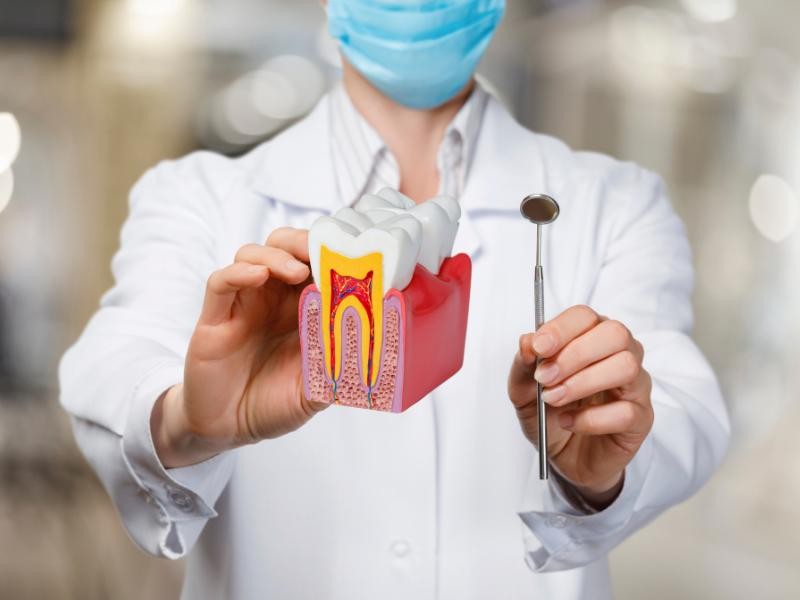
The fear of dental devitalization is still very common among patients.
Many people associate the procedure with intense pain, discomfort and negative experiences from the past.
However, modern dental medicine has evolved significantly, making dental devitalization much more comfortable, accurate and safe.
Thanks to modern anesthesia, digital techniques and current equipment, most patients perform the treatment with comfort and without significant pain.
At Alora Clínic , in Ramada, Odivelas, Lisbon, we use digital technology and a humanized approach to provide calmer, more predictable and comfortable treatments.
1. What is dental devitalization?
Dental Devitalization is a procedure performed when the tooth pulp, where nerves and blood vessels are located, is inflamed or infected.
The objective of the treatment is:
- eliminate infection;
- remove inflammation;
- preserve the natural tooth;
- relieve pain;
- restore dental function.
After cleaning and disinfecting the root canals, the inside of the tooth is properly sealed.
2. After all, does dental devitalization hurt?
In most cases, no.
Currently, dental devitalization is performed with effective local anesthesia and modern techniques that significantly reduce discomfort.
The patient often feels more pain before treatment, due to infection or inflammation, than during the procedure itself.
The treatment exists precisely to eliminate this pain.
3. Why are some people afraid of dental devitalization?
Fear is generally associated with old experiences, negative stories or misinformation.
In the past, treatments were performed with fewer technological resources and less effective anesthetics.
Today, the reality is completely different.
Digital dentistry allows procedures:
- faster;
- more precise;
- less invasive;
- more comfortable;
- most predictable.
4. What can cause pain before dental devitalization?
Pain is usually related to the condition of the tooth, and not to the treatment itself.
Among the most common causes are:
- deep caries;
- inflammation of the dental pulp;
- infections;
- abscesses;
- tooth fractures;
- trauma.
In many cases, the patient seeks help precisely because the pain has become intense.
5. Can the inflamed tooth make anesthesia difficult?
In some cases, yes.
When there is intense inflammation, the response to anesthesia may become temporarily more difficult.
However, there are currently modern techniques and protocols that help control discomfort even in more complex situations.
The experience of the clinical team also makes a big difference in patient comfort.
6. Is there pain after dental devitalization?
After the procedure, some patients may present:
- slight sensitivity;
- temporary discomfort;
- feeling of pressure when chewing.
These symptoms tend to be mild and gradually disappear in the following days.
Postoperative discomfort tends to be easily controlled with proper guidance and medication.
7. How long can the discomfort last?
The recovery time varies according to:
- degree of inflammation;
- presence of infection;
- case complexity;
- individual response of the organism.
In most cases, discomfort improves significantly in a few days.
If the pain persists intensely, it is important to seek professional reassessment.
8. What signs deserve attention after treatment?
Some symptoms may indicate the need for additional monitoring.
Should seek evaluation if they exist:
- Persistent intense pain;
- significant swelling;
- fever;
- presence of pus;
- pain that progressively worsens;
- difficulty chewing.
Early follow-up helps to avoid complications.
9. How to relieve discomfort after dental devitalization?
Some simple care helps to promote recovery.
- follow the prescribed medication correctly;
- avoid very hard foods in the first days;
- maintain good oral hygiene;
- avoid chewing on the initially treated tooth;
- attend follow-up consultations.
Adherence to clinical guidelines is essential for a smooth recovery.
10. Does digital technology make treatment more comfortable?
Sim.
Digital dentistry brought important advances for the realization of dental devitalization.
Among the modern resources used stand out:
- digital radiography;
- CT scan;
- electronic apical locators;
- modern rotary systems;
- clinical magnification.
These technologies allow treatments:
- faster;
- more precise;
- less invasive;
- most predictable.
11. Why is it important to treat quickly?
Ignoring a dental infection can lead to major complications.
Without treatment, the problem can evolve to:
- abscesses;
- intense pain;
- tooth loss;
- bone infection;
- facial swelling.
The earlier the treatment is carried out, the greater the chances of preserving the natural tooth.
12. Where to perform dental devitalization?
The treatment should be carried out in a clinic with experience in digital dental medicine, accurate diagnosis and personalized follow-up.
At Alora Clínic , in Ramada, Odivelas, Lisbon, we use modern technology and a humanized approach to provide safer, more comfortable and predictable treatments.
13. Conclusion
The idea that dental devitalization damages is increasingly associated with the past.
Nowadays, thanks to modern anesthesia, digital technology and minimally invasive techniques, treatment has become much more comfortable and predictable.
In many cases, the procedure is precisely what eliminates the pain caused by tooth infection or inflammation.
At Alora Clínic , in Ramada, Odivelas, Lisbon, we offer personalized treatments with modern technology, comfort and individualized support.
If you have dental pain or want to clarify doubts about dental devitalization, you can schedule an evaluation consultation with our team.