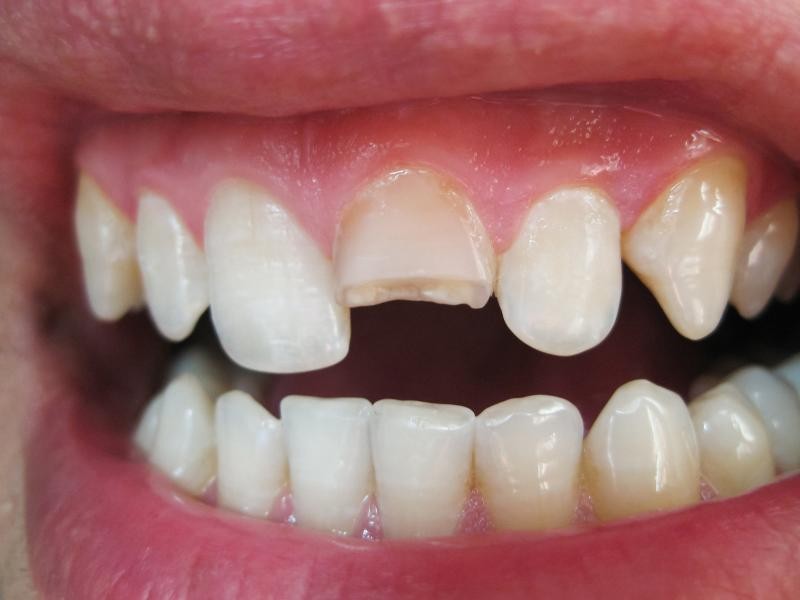
Breaking a tooth is an unexpected situation that can cause concern, discomfort and many doubts.
Whether it happens during a meal, sports practice, fall or accident, knowing what to do after a tooth is essential to avoid complications and increase the chances of recovery.
Depending on the severity of the fracture, the tooth may present pain, tenderness, bleeding or exposure of the inner part.
At Alora Clínic , in Ramada, Odivelas, Lisbon, we offer digital diagnostics and personalized treatments to restore split teeth quickly, comfortably and accurately.
1. What to do immediately after chipping a tooth?
The first recommendation is to stay calm.
Afterwards, you should:
- assess fracture extension;
- check for bleeding;
- save the tooth fragment;
- rinse your mouth with water;
- avoid chewing on the affected area;
- Seek service quickly.
Whenever possible, the fragment should be stored in milk or physiological serum.
2. Is a broken tooth an emergency?
In many cases, yes.
Especially when they exist:
- intense pain;
- bleeding;
- dental pulp exposure;
- dental mobility;
- swelling;
- difficulty chewing.
The faster the treatment is carried out, the greater the chances of preserving the natural tooth.
3. Why can a broken tooth cause pain?
Pain occurs because the fracture can reach deeper layers of the tooth, exposing sensitive structures.
Depending on the depth, there may be:
- sensitivity to cold and heat;
- chewing pain;
- inflammation of the dental pulp;
- nervous exposure;
- gingival irritation.
The bigger the fracture, the greater the discomfort tends to be.
4. How to relieve pain until getting care?
Some measures can help temporarily:
- apply cold compress on the face;
- avoid very hot or cold foods;
- prefer soft foods;
- do not chew on the affected side;
- maintain delicate oral hygiene.
These measures do not replace professional treatment, but help to reduce the initial discomfort.
5. Can I wait a few days to treat a split tooth?
The ideal is not to postpone treatment.
Even small fractures can allow bacteria to enter, increasing the risk of:
- infections;
- pulpal inflammation;
- abscesses;
- aggravation of fracture;
- tooth loss.
Early care usually allows more conservative treatments.
6. What to do if a front tooth breaks?
The front teeth have a great aesthetic and functional impact.
In these cases, it is important to seek care quickly to restore:
- smile aesthetics;
- speaks;
- chewing;
- facial harmony.
Depending on the case, the fragment can even be reused in the reconstruction.
7. What happens when the root is exposed?
When the fracture reaches deep areas, the tooth root or pulp may be exposed.
This may result in:
- intense pain;
- extreme sensitivity;
- higher risk of infection;
- internal inflammation of the tooth.
In these cases, the care must be carried out urgently.
8. Can chipping a tooth while eating cause infection?
Sim.
When there is a tooth fracture, the protective structure of the tooth is compromised.
This makes it easier for bacteria to enter, especially during chewing.
Without proper treatment, may arise:
- inflammations;
- infections;
- abscesses;
- Persistent pain.
9. Can a split tooth go back to normal?
In many cases, yes.
Modern dental medicine offers different solutions to restore aesthetics and function.
Treatment depends on the severity of the fracture and the amount of structure preserved.
10. Can I brush my teeth at home?
Not recommended.
Household glues and improvised solutions can:
- aggravate the lesion;
- cause infections;
- make treatment difficult;
- damage the dental structure.
The ideal is to store the fragment correctly and seek a dentist.
11. How long can I stay with a broken tooth?
As little time as possible.
The faster the treatment is performed, the greater the chances of tooth recovery.
Waiting too long can lead to:
- aggravation of fracture;
- infections;
- need for more invasive treatments;
- Tooth loss.
12. What treatments are there for split teeth?
Treatment depends on the extent of the fracture.
Among the most commonly used solutions are:
- aesthetic restorations;
- dental veneers;
- dental crowns;
- dental devitalization;
- reconstruction of the tooth;
- implantology in more severe cases.
Digital diagnostics helps define the best approach for each situation.
13. How does digital technology help in these cases?
Digital dentistry allows faster and more accurate diagnoses.
Among the resources used stand out:
- digital radiography;
- CT scan;
- intraoral scan;
- 3D digital planning.
These technologies help to assess the extent of the fracture and to plan more predictable and conservative treatments.
14. Where to treat a split tooth?
The ideal is to look for a clinic with experience in oral rehabilitation, dental emergency and digital technology.
At Alora Clínic , in Ramada, Odivelas, Lisbon, we provide digital diagnosis, personalized treatments and humanized monitoring to restore split teeth with comfort and precision.
15. Conclusion
Breaking a tooth can be a scary situation, but acting quickly makes all the difference.
Knowing what to do in the first moments helps to:
- reduce complications;
- preserving the tooth;
- avoid infections;
- improve treatment results.
Modern dental medicine offers effective solutions to restore aesthetics, function and comfort after a tooth fracture.
At Alora Clínic , in Ramada, Odivelas, Lisbon, we offer modern technology, personalized monitoring and advanced treatments to take care of your smile.
If you have broken a tooth or want to perform an evaluation, you can schedule a consultation with our team.