The digital dentistry revolutionized the way dental treatments are performed, bringing more precision, comfort, speed and predictability to patients and professionals.
Thanks to technological advances, today it is possible to carry out more detailed diagnoses, plan digital treatments and execute procedures with a high level of security and personalization.
Technologies such as intraoral scanning, computed tomography, digital smile planning and CAD/CAM systems have profoundly transformed modern dental medicine.:ContentReference [oaicite:0] {index=0}
At Alora Clínic , in Ramada, Odivelas, Lisbon, we use advanced digital technology to provide more modern, comfortable and effective treatments.
1. What is digital dentistry?
digital dentistry is a modern approach to dentistry based on the use of digital technologies for diagnosis, planning and execution of dental treatments.:ContentReference [oaicite:1] {index=1}
This evolution replaces many traditional methods, allowing for more precise, fast and predictable procedures.
Among the most used technologies are:
- intraoral scan;
- digital radiography;
- CT scan;
- digital smile planning;
- 3D printing;
- CAD/CAM technology;
- guided surgery.
2. How does digital dentistry work?
The process begins with the capture of digital images of the patient's oral cavity.
Through intraoral scanners, it is possible to create highly accurate three-dimensional models of teeth and gums, often eliminating the need for traditional moldings.:ContentReference [oaicite:2] {index=2}
These images are processed by specialized software, allowing:
- detailed diagnosis;
- virtual treatment planning;
- smile simulation;
- digital production of dentures;
- personalized treatments.
This significantly improves clinical accuracy and patient experience.
3. What are the advantages of digital dentistry?
Digital dentistry offers countless benefits.
- faster treatments;
- greater accuracy;
- more comfort for the patient;
- less invasive procedures;
- more predictable results;
- personalized digital planning;
- reduction of discomfort;
- better adaptation of prostheses;
- more efficacy in treatments;
- better communication between patient and dentist.:ContentReference [oaicite:3] {index=3}
In addition, many treatments can be performed in fewer consultations.
4. Why is digital dentistry more comfortable?
One of the great advantages of digital dentistry is the elimination of many traditional uncomfortable procedures.
Intraoral scanning, for example, often replaces conventional moldings, which could cause discomfort, nausea or vomiting reflex.:ContentReference [oaicite:4] {index=4}
This provides:
- more comfort;
- faster consultations;
- less anxiety;
- best clinical experience.
5. What is intraoral scanning?
Intraoral scanning is a technology that allows you to create three-dimensional digital images of the patient's mouth.
The scanner runs through the teeth and gums, capturing high-precision images in real time.
Among the main advantages stand out:
- elimination of traditional moldings;
- more comfort;
- greater accuracy;
- speed;
- better adaptation of prostheses and aligners.
6. What is CAD/CAM technology?
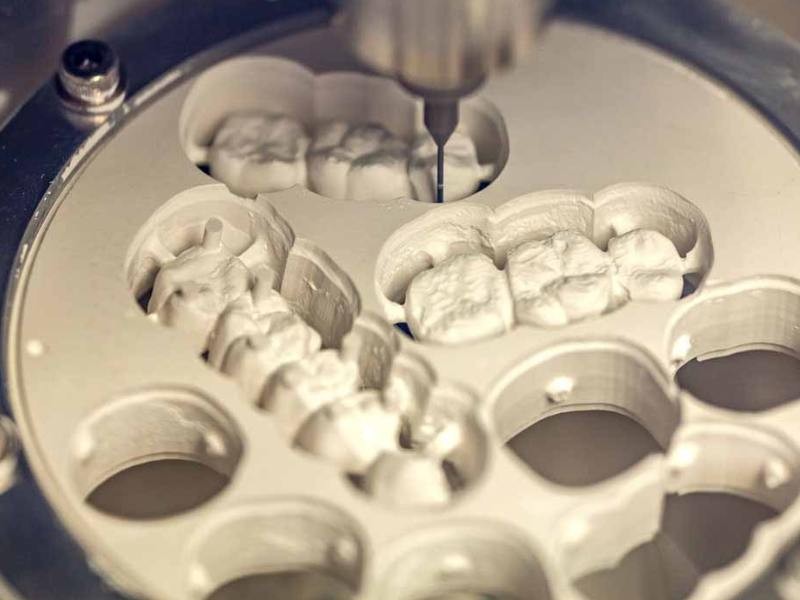
CAD/CAM technology allows you to design and manufacture dental restorations through digital systems.
CAD stands for Computer-Aided Design and CAM stands for Computer-Aided Manufacturing .
This technology is used in the production of:
- dental crowns;
- facets;
- dental lenses;
- prostheses on implants;
- aesthetic restorations.
In many cases, the prosthesis can be produced and installed on the day.:ContentReference [oaicite:5] {index=5}
7. What is guided surgery in implantology?
Guided surgery is a modern technique used in digital implantology.
Through computed tomography and virtual planning, implant positioning is performed with high accuracy.:ContentReference [oaicite:6] {index=6}
This allows:
- more safety;
- greater predictability;
- less invasive surgeries;
- reduction in surgical time;
- more postoperative comfort.
8. How does digital dentistry help in orthodontics?
Digital orthodontics has made treatments more modern and comfortable.
With intraoral scanning, it is possible to produce:
- clear aligners;
- restraints;
- personalized orthodontic appliances;
- digital orthodontic planning.
This significantly improves the accuracy and comfort of orthodontic treatments.:ContentReference [oaicite:7] {index=7}
9. How does digital dentistry help in endodontics?
Digital endodontics uses technological resources for more accurate and safe treatments.
Techniques such as Endouide allow guided access to dental canals, especially in complex cases or calcified channels.:ContentReference [oaicite:8] {index=8}
This contributes to:
- more precision;
- less tooth wear;
- more safety;
- Conservative treatments.
10. What is the importance of digital radiology?
Digital radiology is essential for modern dental diagnosis and planning.
Among the most used exams are:
- digital radiography;
- cone beam computed tomography;
- panoramic radiography;
- periapical radiographs.
These technologies allow for more detailed images, less radiation exposure and more accurate diagnoses.:ContentReference [oaicite:9] {index=9}
11. Who is digital dentistry indicated for?
Digital dentistry can benefit patients of different ages and clinical needs.
It is indicated for:
- implantology;
- orthodontics;
- dentures;
- oral rehabilitation;
- dental veneers;
- dental contact lenses;
- aesthetic smile planning;
- guided surgeries.
Each case should be evaluated individually to define the best treatment plan.
12. Does digital dentistry completely replace traditional methods?
Digital dentistry complements and improves many traditional procedures, making treatments more efficient and predictable.
However, the most important thing remains the combination between:
- clinical experience;
- personalized planning;
- modern technology;
- technical knowledge.
The goal is always to provide safer, more comfortable and effective treatments.
13. Where to carry out treatments with digital dental medicine?
The ideal is to look for a clinic equipped with modern technology, experience in digital flow and personalized monitoring.
At Alora Clínic , in Ramada, Odivelas, Lisbon, we use advanced digital technology to provide more accurate, fast and comfortable treatments.
14. Conclusion
The digital dentistry has profoundly transformed modern dentistry, providing more accurate, fast, comfortable and predictable treatments.
Technologies such as intraoral scanning, digital radiology, 3D planning and CAD/CAM systems have revolutionized the clinical experience of patients and professionals.:ContentReference [oaicite:10] {index=10}
In addition to improving the quality of treatments, digital dentistry allows greater comfort, less invasiveness and highly personalized results.
At Alora Clínic , in Ramada, Odivelas, Lisbon, we offer modern treatments with advanced digital technology and individualized monitoring.
If you want to know more about digital dentistry or make a personalized evaluation, you can schedule a consultation with our team.