Dental Implants: The Ideal Solution to Recover Your Smile
Find out how dental implants work, who can place them and why they are now considered the closest solution to a natural tooth.
Losing a tooth has consequences that go far beyond aesthetics - it affects chewing, speech, bone health and self-confidence. Dental implants are, today, the most complete and durable solution to replace lost teeth.
Implantology is one of the most advanced and sought-after specialties of modern dental medicine. With success rates above 95%, dental implants return not only the smile, but the quality of life of those who place them. In this article, we explain in detail how the treatment works, who can benefit from it and what to expect at each stage of the process.
What is a Dental Implant?
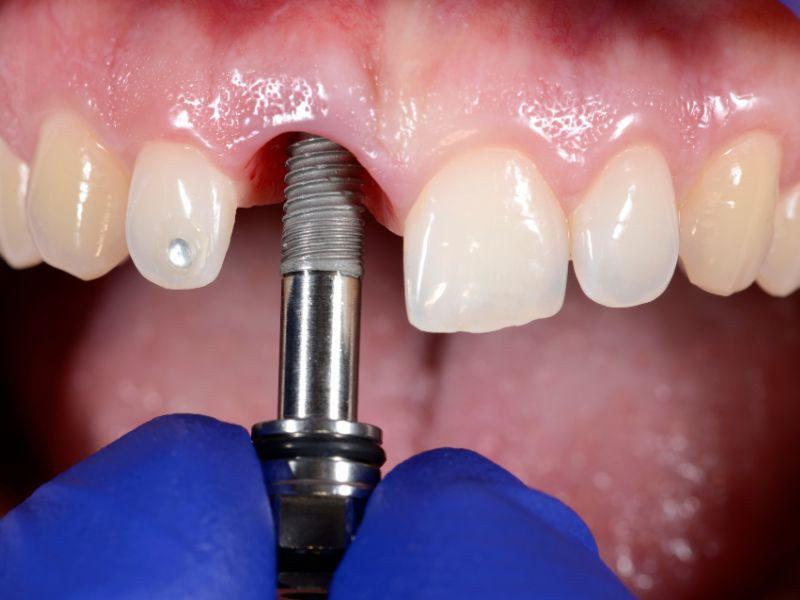
A dental implant is a cylindrical structure in titanium — a biocompatible material widely used in medicine — that is surgically inserted into the jawbone to replace the root of a missing tooth. On this abutment, a personalized dental crown is then fixed, which mimics the shape, color and function of the natural tooth.
The implant is, in practice, the solution closest to a natural tooth: it is integrated into the bone, does not depend on neighboring teeth for support and allows a chewing function practically equivalent to that of an original tooth.
Titanium screw that is integrated into the maxillary bone through the osseointegration process, functioning as an artificial root.
Connecting piece that attaches the implant to the crown. It can be in titanium, zirconia or other materials, according to the desired aesthetics.
The visible part of the implant — made of ceramic or zirconia, faithfully reproducing the color and shape of natural teeth.
How is the treatment going? Phase a Phase
The implantology specialist performs a complete clinical evaluation, including radiographic examinations (Orthopantomography and, when necessary, CBCT — Cone Beam Computed Tomography). Based on these data, the personalized treatment plan is drawn up.
Surgery is performed in a clinical setting, under local anesthesia. The implant is inserted into the jaw bone in a minimally invasive manner. The procedure is painless and usually takes between 30 to 60 minutes per implant.
After surgery, the body begins the process of osseointegration — the bone grows around the implant and attaches to it, creating a solid and stable foundation. This period is critical to the success of treatment.
Once the integration of the implant is confirmed, the connecting abutment is placed. In some cases, this step may be performed at the same time as implant placement surgery.
The custom dental crown — manufactured in the laboratory based on precision digital molding — is attached to the abutment. The occlusion is adjusted to ensure perfect comfort and functionality.
“In certain cases, it is possible to place a temporary crown on the same day of surgery - the so-called immediate implant. This option will be evaluated individually by the specialist, depending on the bone quality and the implantation site.”
Who Can Put Dental Implants?
The vast majority of healthy adults are candidates for this treatment. The essential condition is the existence of sufficient bone structure at the implantation site, in addition to good oral and general health.
✓ Good Candidates
- Adults with good general health
- Healthy gums without active periodontitis
- Adequate Bone Volume and Density
- Non-smokers or with reduced tobacco consumption
- Controlled diabetes
- Commitment to oral hygiene
⚠ Require Specific Assessment
- Smokers (higher risk of failure)
- Diabetics with inadequate control
- Cancer patients undergoing radiotherapy in the craniofacial region
- Patients taking bisphosphonates
- Significant bone loss (may require prior bone grafting)
- Under 18 years old (growing bone)
Benefits of Implants in Relation to Other Solutions
Unlike removable dentures, which sit on the gums and can move during chewing, or fixed bridges, which require the wear of healthy neighboring teeth, implants are autonomous — they preserve the integrity of adjacent teeth and function independently.
Another often underestimated benefit is bone preservation. When a tooth is lost, the bone that supported it begins to gradually reabsorb. The implant, by transmitting the masticatory forces to the bone, stimulates its maintenance and prevents the loss of bone volume - which has a direct impact on the appearance of the face in the long term.
Frequently Asked Questions
The implant itself (the titanium root) can last a lifetime, as long as proper care and regular consultations are maintained. The dental crown, as it is subject to masticatory wear and tear, may need replacement after 10 to 15 years, depending on the patient's habits.
The procedure is performed under local anesthesia, so there is no pain during surgery. After the effect of anesthesia wears off, it is normal to feel some pressure and discomfort in the first few days. These symptoms are controlled with painkillers prescribed by your doctor and tend to go away quickly.
Titanium is highly biocompatible, so allergic reactions are extremely rare. Failure, when it occurs, is usually due to poor bone integration — influenced by factors such as smoking, uncontrolled diabetes or post-surgical infection. With a good selection of the candidate and adequate postoperative care, the success rate is over 95%.
Implant hygiene is done in the same way as natural teeth: bidaily brushing, flossing or interdental brushing, and regular maintenance visits. Although the implant may not have caries, the gum and the bone around it can become inflamed (peri-implantitis) if hygiene is not taken care of.
Yes. Multiple implants can be placed in a single surgical session, reducing the number of procedures and the total treatment time. In cases of total absence of teeth, protocols such as All-on-4 or All-on-6 allow the entire arch to be rehabilitated with a reduced number of implants.
Regain the Function and Confidence of Your Smile
At Alora Clínic, the implantology team evaluates each case with advanced diagnostic technology and presents a transparent treatment plan, personalized and adapted to your profile. Mark your inquiry and take the first step.
Schedule Evaluation Consultation