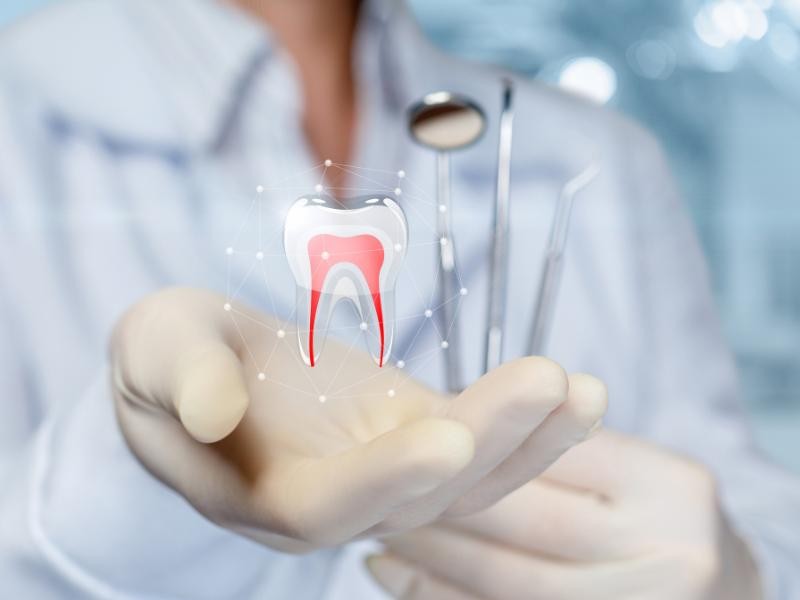
A dental devitalization is one of the best known procedures in dental medicine, especially in situations of intense pain, infection or inflammation inside the tooth.
For many years, this treatment was associated with several consultations and delayed procedures. However, with the advances of digital dentistry, it is already possible to perform the dental devitalization in a single session in many cases.
This modern approach allows greater convenience, speed and comfort for the patient, maintaining high standards of safety and clinical precision.
At Alora Clínic , in Ramada, Odivelas, Lisbon, we use digital technology and modern techniques to provide more efficient and personalized treatments.
1. What is dental devitalization?
Dental Devitalization is a treatment performed when the dental pulp, located inside the tooth, suffers inflammation or infection.
The dental pulp contains nerves and blood vessels responsible for the vitality of the tooth. When this structure is compromised, severe pain, tenderness and infection can occur.
The treatment consists of removing the affected tissue, cleaning and disinfecting the root canals and sealing the inside of the tooth to preserve its structure and functionality.
2. Is it possible to perform dental devitalization in a single session?
Sim. In many cases, the dental devitalization in a single session is already a reality thanks to modern techniques and the evolution of digital dentistry.
With more precise equipment and digital planning, the procedure can be performed efficiently in a single consultation, depending on the clinical characteristics of the patient.
The possibility depends on factors such as:
- tooth condition;
- degree of infection;
- anatomical complexity of the canals;
- presence of abscess;
- general oral health conditions.
3. What are the advantages of dental devitalization in a single session?
single session dental devitalization offers important benefits for many patients.
- fewer consultations;
- greater convenience;
- reduction in total treatment time;
- less tooth exposure between sessions;
- reducing the risk of new contamination;
- faster and more efficient treatment.
In addition, many patients feel more comfortable solving the problem in a single visit.
4. Is dental devitalization in a single session indicated for all cases?
No. Despite the advantages, not all cases can be dealt with in a single session.
In certain situations, the dentist may choose to split the treatment into two or more visits to ensure greater clinical safety.
Some cases that may require more sessions include:
- more extensive infections;
- presence of active abscess;
- complex root canals;
- need for intracanal medication;
- most delicate clinical situations.
5. Does dental devitalization in a single session cause more pain?
No. Today, root canal treatment is performed under local anaesthesia using modern techniques, making the procedure much more comfortable.
Discomfort is usually related to the inflammatory state of the tooth before treatment, and not to the number of sessions performed.
After the procedure, there may be:
- slight sensitivity;
- temporary discomfort when chewing;
- feeling of pressure in the early days.
These symptoms tend to improve progressively.
6. What technologies allow dental devitalization to be performed in a single session?
Technological advances played a fundamental role in the evolution of this procedure.
Among the technologies used stand out:
- digital radiography;
- CT scan;
- electronic apical locators;
- mechanized rotary systems;
- clinical magnification;
- modern channel instrumentation.
These resources increase accuracy, reduce clinical time and favor better results.
7. How do I know if my case allows dental devitalization in a single session?
Only an individualized clinical evaluation can determine whether dental devitalization in a single session is appropriate for you.
The dentist performs clinical and imaging exams to assess:
- degree of infection;
- dental pulp condition;
- anatomical complexity of the tooth;
- presence of pain or abscess;
- general conditions of oral health.
8. How is recovery after dental devitalization?
Recovery after dental devitalization tends to be calm in most cases.
In the early days, the patient may feel:
- slight sensitivity;
- discomfort when chewing;
- temporary feeling of pressure.
These symptoms tend to gradually disappear.
It is important to follow the guidelines of the dentist and maintain follow-up consultations.
9. What is the care after dental devitalization?
Some care helps to promote recovery and preserve the structure of the treated tooth.
- maintain proper oral hygiene;
- avoid very hard foods in the first days;
- follow clinical guidelines correctly;
- perform the final restoration when indicated;
- to appear for review consultations.
10. Where to perform dental devitalization?
The dental devitalization should be performed by qualified professionals, using modern technology and accurate diagnosis.
At Alora Clínic , in Ramada, Odivelas, Lisbon, we use digital technology and personalized planning to provide safer, more predictable and comfortable treatments.
Conclusion
The dental devitalization in a single session is already possible in many cases thanks to the advances of modern dental medicine.
When there is adequate indication, this approach allows greater convenience, speed and comfort to the patient, maintaining high standards of clinical safety.
At Alora Clínic , in Ramada, Odivelas, Lisbon, we offer personalized treatments with digital technology and individualized monitoring.
If you want to know if dental devitalization in a single session is indicated for you, you can schedule an evaluation consultation with our team.