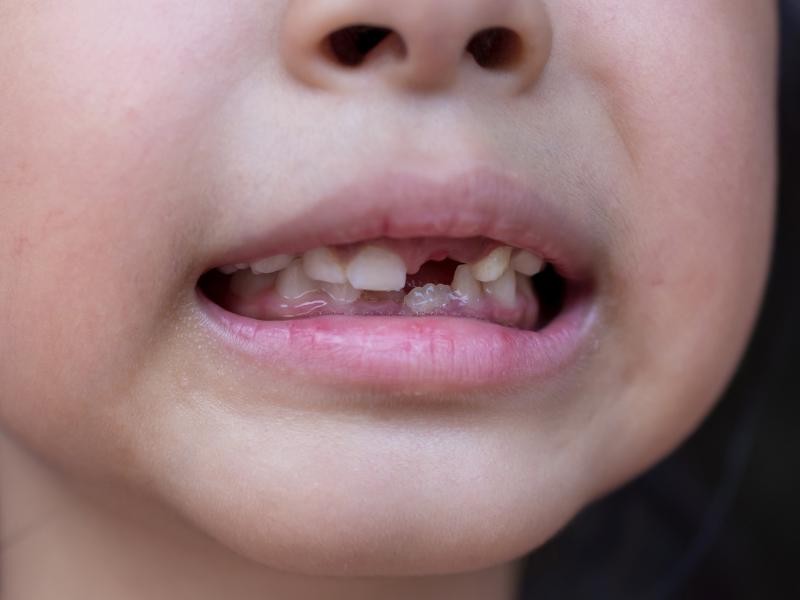
Seeing a tooth party on a child can be a scary moment for any parent or manager. Falls, playtime, accidents at school or sporting activities can cause unexpected tooth trauma, causing pain, bleeding and worry.
Right now, knowing how to act quickly makes all the difference to preserve the child's oral health and avoid future complications.
In addition, many doubts arise: does the tooth need treatment? Is it an emergency? Is there a difference between milk tooth and permanent tooth?
At Alora Clínic , in Ramada, Odivelas, Lisbon, we provide personalized monitoring and digital technology for the evaluation and treatment of dental trauma in children.
1. What to do when the child breaks a tooth?
The first attitude is to stay calm.
Next, you should evaluate:
- if there is bleeding;
- if the child feels intense pain;
- if the tooth is loose;
- if there was loss of fragments;
- if the tooth is milk or permanent.
Whenever possible, the tooth fragment should be stored in cold milk or physiological serum, as it may eventually be reused in the treatment.
The ideal is to seek professional evaluation as soon as possible.
2. What is the first care after a broken tooth?
First care is critical to minimize damage and increase the chances of recovery.
Recommended:
- gently wash your mouth with cold water;
- apply cold compress on the face;
- prevent the child from chewing on the affected side;
- control bleeding with clean gauze;
- save the tooth fragment correctly.
You should not attempt to glue the fragment at home or handle the tooth excessively.
3. When should you take your child to the dentist?
In case of of a child split tooth, the evaluation should be carried out as early as possible, preferably on the same day.
Even when the fracture appears small, there may be invisible internal damage without clinical and radiographic examination.
Early monitoring helps with:
- reduce the risk of infection;
- preserve the dental structure;
- avoid future complications;
- guarantee better aesthetic and functional recovery.
4. Is a broken tooth in a child an emergency?
Yes, in many cases it can be considered a dental emergency.
Especially when there are signs such as:
- intense pain;
- persistent bleeding;
- dental mobility;
- swelling;
- dental pulp exposure;
- difficulty chewing or speaking.
The faster the treatment is carried out, the greater the chances of preserving the tooth.
5. Does split milk tooth need treatment?
Sim.
Although temporary, milk teeth play important functions in the development of the child.
They help:
- in chewing;
- in the speech;
- in the orientation of the growth of permanent teeth;
- in the maintenance of dental space.
Ignoring a fracture can cause infections and affect the development of the permanent tooth.
6. What to do if the permanent tooth breaks?
When the affected tooth is permanent, care becomes even more important.
In these cases:
- saves the tooth fragment;
- avoid touching the root or internal areas;
- keep the fragment in milk or physiological serum;
- Seek immediate assistance.
In many cases, the fragment can be reused in aesthetic rehabilitation.
7. What are the risks of not treating a split tooth?
Ignoring a dental trauma can lead to several complications.
Among the main risks are:
- persistent pain;
- infections;
- abscesses;
- pulp necrosis;
- tooth discoloration;
- tooth loss;
- aesthetic and functional problems.
The earlier the treatment is performed, the less complications tend to be.
8. How to tell if the nerve or root was affected?
Some signs may indicate internal tooth compromise.
Among them:
- intense and continuous pain;
- extreme sensitivity;
- darkening of the tooth;
- dental mobility;
- gingival swelling;
- presence of fistula or pus.
Digital exams help assess possible damage to the tooth root or pulp.
9. What to do if there is a lot of bleeding?
When broken tooth in child causes major bleeding, it should:
- apply gentle compression with clean gauze;
- keep the child calm;
- use cold compress on face;
- avoid hot food;
- Seek service quickly.
If bleeding persists for several minutes, it is important to seek urgent care.
10. Is there a difference between treating milk teeth and permanent teeth?
Sim.
Treatment varies according to the type of tooth, the age of the child and the severity of the trauma.
In milk teeth, the main objective is to preserve the function and protect the development of the permanent tooth.
In permanent teeth, we seek to preserve the dental structure to the maximum, guaranteeing function, aesthetics and long-term stability.
11. How does digital technology help in these cases?
Digital technology allows a more accurate diagnosis of dental trauma.
Among the resources used stand out:
- digital radiography;
- CT scan;
- intraoral scan;
- digital planning.
These tools help identify internal fractures, root damage and possible changes in the dental pulp.
12. Where to treat dental trauma in children?
The treatment should be carried out in a clinic with experience in pediatric dentistry, dental traumatology and digital diagnosis.
At Alora Clínic , in Ramada, Odivelas, Lisbon, we offer personalized support, modern digital technology and a humanized approach to take care of children's oral health.
13. Conclusion
A split tooth in a child should always be evaluated quickly, even when the fracture seems small.
Early care helps preserve oral health, avoid complications and guarantee better aesthetic and functional results.
Knowing how to act in the first minutes makes all the difference in the success of the treatment.
At Alora Clínic , in Ramada, Odivelas, Lisbon, we provide specialized monitoring for childhood dental trauma, with modern technology and humanized care.
If your child has suffered a dental trauma or has a broken tooth, you can schedule an evaluation consultation with our team.