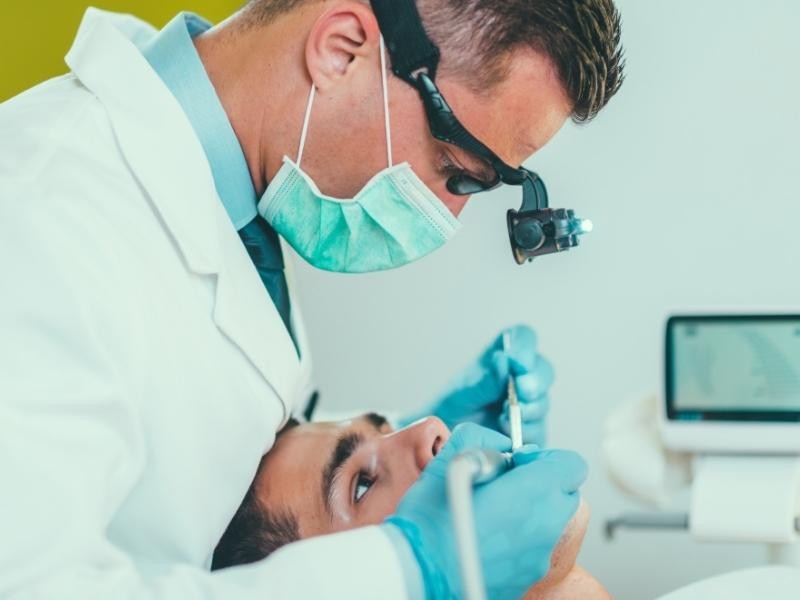
dental devitalization is one of the most important procedures in modern dental medicine, being essential to preserve teeth compromised by infections, deep caries or trauma.
With the advances of digital dentistry, it has become possible to perform this treatment with greater precision, comfort and predictability.
Currently, digital technology allows more detailed diagnoses, better visualization of dental anatomy and less invasive treatments.
At Alora Clínic , in Ramada, Odivelas, Lisbon, we use modern digital resources to provide safer, more efficient and personalized treatments.
1. What is dental devitalization?
Dental Devitalization is a treatment performed when the dental pulp, located inside the tooth, suffers inflammation or infection.
The pulp contains nerves and blood vessels responsible for the vitality of the tooth. When this structure is compromised, severe pain, tenderness and infection can occur.
The treatment consists of:
- remove the compromised tissue;
- clean the root canals;
- disinfect the inside of the tooth;
- seal the channels to prevent new infections.
2. How has digital technology changed dental devitalization?
Digital technology has significantly transformed the way dental devitalization is performed.
Before, treatment depended mainly on conventional radiographs and more limited techniques.
Currently, digital resources allow:
- more accurate diagnosis;
- three-dimensional visualization of the tooth;
- better identification of root canals;
- greater clinical predictability;
- faster and more comfortable treatments.
3. What are the advantages of dental devitalization with digital technology?
The use of digital technology offers important benefits for the patient and for the accuracy of treatment.
- greater clinical accuracy;
- more detailed diagnosis;
- lower risk of failure;
- more comfort during the procedure;
- more efficient treatment;
- reduction in the number of consultations in many cases;
- better predictability of results.
4. How does digital technology increase the accuracy of treatment?
One of the biggest challenges of dental devitalization is the complexity of the internal anatomy of the teeth.
Some teeth have very thin channels, curvatures or branches that are difficult to identify.
Digital technology allows to analyze these structures in greater detail, reducing the risk of untreated canals or incomplete cleanings.
Among the resources used stand out:
- digital radiography;
- CT scan;
- electronic apical locators;
- clinical magnification;
- mechanized rotary systems.
5. Does digital technology reduce the risk of errors?
Sim. One of the great benefits of digital dentistry is precisely the reduction of the risk of clinical failures.
Digital exams allow you to visualize details that could go unnoticed in conventional methods.
This helps to avoid:
- untreated channels;
- incomplete cleanings;
- instrumentation errors;
- inadequate seals;
- need for portraits.
6. How does digital diagnostics work?
Digital diagnosis is one of the most important stages of dental devitalization .
Through digital examinations, the dentist can assess:
- degree of infection;
- anatomy of the root canals;
- presence of inflammation;
- tooth fractures;
- Associated bone injuries.
Depending on the case, they can be used:
- digital radiographs;
- CT scan;
- clinical photographs;
- clinical magnification.
7. What is the care after dental devitalization?
After dental devitalization , some care helps to promote recovery and preserve the treated tooth.
- maintain proper oral hygiene;
- avoid very hard foods in the first days;
- follow clinical guidelines correctly;
- attend follow-up consultations;
- perform the definitive restoration when indicated.
In many cases, recovery tends to be quick and comfortable.
8. Can digital dental devitalization be performed on any tooth?
Sim. Digital technology can be applied to different types of teeth, including:
- anterior teeth;
- pre-molars;
- molars with complex anatomy.
Three-dimensional visualization facilitates treatment even in more complex cases, increasing clinical predictability.
9. Is there a difference in recovery?
In many cases, recovery after digital dental devitalization tends to be more comfortable.
This happens because:
- the procedure is more precise;
- there is less trauma to the tissues;
- treatment tends to be more efficient;
- the risk of complications decreases.
Many patients are able to quickly return to normal routine.
10. Where to perform dental devitalization with digital technology?
dental devitalization should be performed in a clinic with experience in digital dentistry, accurate diagnosis and personalized follow-up.
At Alora Clínic , in Ramada, Odivelas, Lisbon, we use modern digital technology for diagnosis, planning and delivery of safer, more comfortable and predictable treatments.
11. Conclusion
The dental devitalization with digital technology represents an important evolution of modern dental medicine.
Thanks to digital resources, it has become possible to carry out more accurate, efficient and comfortable treatments, reducing risks and increasing clinical predictability.
At Alora Clínic , in Ramada, Odivelas, Lisbon, we offer personalized treatments with digital technology and individualized monitoring.
If you want to know more about dental devitalization or need a specialized evaluation, you can schedule a consultation with our team.