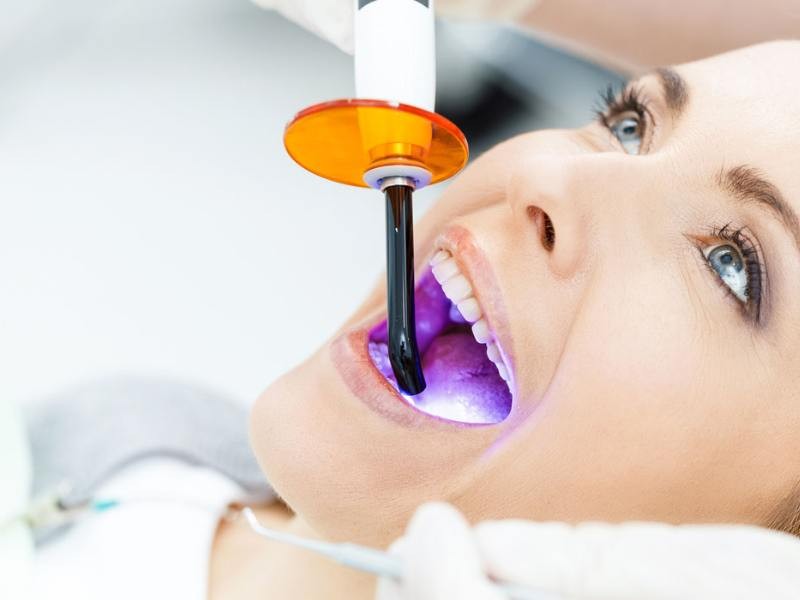
Dental medicine has evolved profoundly in recent decades, making treatments more technological, comfortable, fast and predictable.
Currently, patients have access to advanced digital resources, such as intraoral scanning, digital radiology, computerized planning and minimally invasive treatments.
Modern dental care is quite different from that which existed a few decades ago, when treatments were more limited, uncomfortable and less aesthetic.
Today, digital dentistry allows more accurate diagnoses, personalized treatments and much more natural aesthetic results.
At Alora Clínic , in Ramada, Odivelas, Lisbon, we use advanced digital technology to provide modern, comfortable and highly accurate treatments.
1. What was dentistry like in the old days?
A few decades ago, technological resources were quite limited.
Dental treatments depended much more on manual techniques and there were fewer aesthetic and functional options.
For example, fractured or severely destroyed teeth often had as a solution:
- extractions;
- removable dentures;
- less aesthetic rehabilitations;
- the old “pews”.
Currently, the reality is completely different thanks to technological advances.
2. How has dentures evolved?
The area of dental prosthetics was one of the most technologically evolved.
Today, there are highly resistant and aesthetic materials, allowing much more natural results.
In addition, digital dental medicine brought the CAD/CAM system, which revolutionized the production of dental restorations.
3. What is the CAD/CAM system?
The CAD/CAM system is a digital technology used to design and manufacture dental prostheses using a computer.
The process begins with a digital scan of the mouth, performed using modern intraoral scanners.
These images are processed by specialized software, allowing the new dental structure to be created virtually.
Then, a digital milling machine manufactures the part with high precision.
This allows treatments:
- faster;
- more comfortable;
- more precise;
- more aesthetic.
4. What are the advantages of intraoral scanning?
Intraoral scanning brought a great improvement in the patient experience.
This technology often replaces traditional moulds with doughs, which many people found uncomfortable.
Among the advantages stand out:
- more comfort;
- faster;
- greater accuracy;
- elimination of traditional moldings;
- detailed digital planning.
5. How has orthodontics evolved?
Orthodontics has also undergone a major technological transformation.
For many years, orthodontic treatments depended exclusively on:
- metal brackets;
- threads;
- orthodontic bands;
- elastics.
Although effective, these devices could cause discomfort, canker sores and oral hygiene difficulties.
6. What are transparent aligners?
Transparent aligners represent one of the greatest evolutions of modern orthodontics.
These are removable, transparent and personalized devices, digitally produced through computerized planning.
Among the main advantages are:
- more comfort;
- best aesthetics;
- less emergencies;
- ease of hygiene;
- precise digital planning;
- more predictable treatments.
Currently, many orthodontic treatments can be completed in less time compared to traditional methods.
7. How has endodontics evolved?
Endodontics, responsible for dental devitalization treatments, has also evolved significantly.
Although for many patients the treatment seems similar, currently the procedures are much more technological and precise.
Advances include:
- digital radiology;
- endodontic motors;
- clinical microscopy;
- CT scan;
- guided endodontics.
8. What has changed in dental devitalization treatments?
Modern treatments have become:
- more precise;
- safer;
- less invasive;
- most predictable.
Currently, professionals are able to visualize microscopic structures of the dental canals, something that was previously much more difficult.
This significantly improves diagnosis and clinical outcomes.
9. How has digital radiology revolutionized dentistry?
Digital radiology was another great technological advance.
In the past, X-rays were made on physical films, popularly known as “sheets”.
Today, digital images allow:
- higher image quality;
- digital enlargement;
- contrast settings;
- digital storage;
- rapid sharing of exams.
In addition, radiation exposure is significantly lower compared to the old methods.
10. How has CT helped dentistry?
Computed tomography brought a new dimension to dental diagnosis.
This technology allows you to visualize structures in three dimensions, making it easier:
- surgical planning;
- implantology;
- endodontics;
- guided surgery;
- complex diagnostics.
Diagnostic accuracy has become much higher.
11. Has dentistry become more comfortable?
Yes, much more.
Technological evolution has allowed:
- less discomfort;
- faster treatments;
- fewer consultations;
- less invasive procedures;
- greater clinical predictability.
Many treatments that previously required several consultations can now be performed in much less time.
12. Has digital dentistry improved the aesthetics of treatments?
Sim.
The combination between:
- digital planning;
- modern materials;
- intraoral scan;
- CAD/CAM;
- 3D technology.
allowed much more natural and personalized results.
Currently, many restorations become practically imperceptible.
13. What will the future of dentistry look like?
The trend is that dentistry continues to evolve for treatments:
- increasingly digital;
- more personalized;
- most minimally invasive;
- faster;
- most predictable.
Artificial intelligence, 3D printing and new biomaterials are already beginning to transform the future of modern dentistry.
14. Where to carry out treatments with digital technology?
The ideal is to look for a clinic equipped with modern technology, digital diagnostics and multidisciplinary team.
At Alora Clínic , in Ramada, Odivelas, Lisbon, we use advanced digital resources, including intraoral scanning, digital radiology and personalized digital planning, providing more modern and comfortable treatments.
15. Conclusion
Dental medicine has evolved profoundly over the last few decades, completely transforming the patient experience.
Technologies such as:
- digital dentistry;
- intraoral scan;
- CAD/CAM;
- digital radiology;
- CT scan;
- transparent aligners.
have made treatments faster, more accurate, comfortable and more predictable.
In addition, technological advances have allowed much more natural aesthetic results and increasingly less invasive treatments.
At Alora Clínic , in Ramada, Odivelas, Lisbon, we offer modern treatments with digital technology advanced and personalized accompaniment.
If you want to know better the solutions of modern digital dentistry, you can schedule a consultation with our team.