Dental medicine has evolved significantly over the last few years, becoming more and more technological, precise and personalized.
Currently, in addition to modern treatments, early diagnosis has become one of the fundamental pillars to preserve oral health and allow less invasive and more effective treatments.
In this context, the dental check-up emerges as a complete approach to the evaluation of oral health, allowing to identify changes still in the initial stages and create a personalized planning for each patient.:ContentReference [oaicite:0] {index=0}
At Alora Clínic , in Ramada, Odivelas, Lisbon, we carry out complete evaluations using advanced digital technology, providing more detailed diagnoses, personalized follow-up and multidisciplinary planning.
1. What is dental check-up?
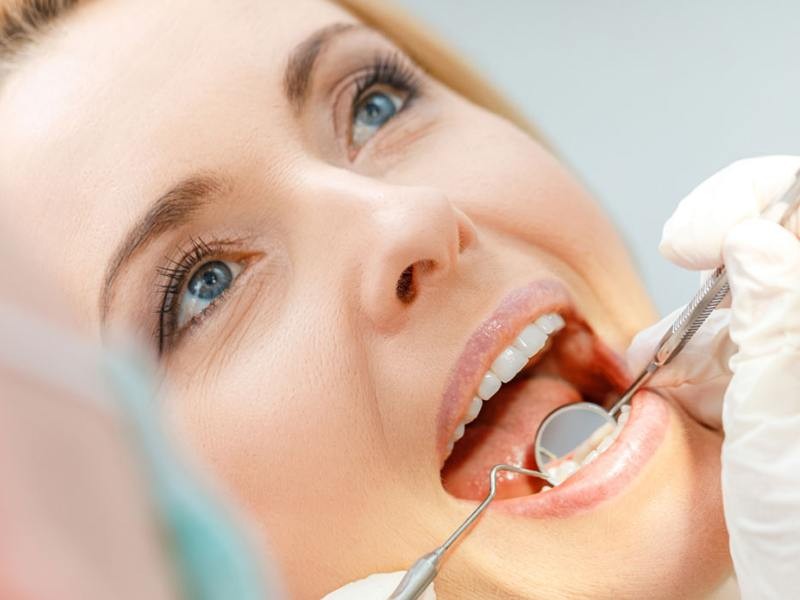
dental check-up is a detailed evaluation of oral health, performed through clinical examination, digital diagnosis and personalized analysis of the structures of the mouth.
The objective is to identify:
- caries;
- gingival problems;
- bone changes;
- tooth wear;
- bite changes;
- oral injuries;
- Preventive treatment needs.
The earlier the diagnosis, the greater the chances of conservative and effective treatments.
2. Why is dental check-up important?
Many oral diseases develop silently, without causing symptoms in the early stages.
The check-up allows you to identify changes before they become more complex problems.
Among the benefits stand out:
- early diagnosis;
- prevention of complications;
- personalized planning;
- reduction of invasive treatments;
- oral health monitoring;
- long term monitoring.:ContentReference [oaicite:1] {index=1}
3. How does the dental check-up work?
The dental check-up is carried out in different stages, allowing a complete evaluation of the oral cavity and associated structures.
The process typically includes:
- detailed anamnesis;
- clinical evaluation;
- digital radiographs;
- intraoral photographs;
- extramural photographs;
- functional and aesthetic analysis;
- multidisciplinary planning.
All this information helps to build a more complete and accurate diagnosis.
4. What is the anamnesis at the dental check-up?
The anamnesis is the initial phase of the evaluation, where the patient answers questions related to:
- medical history;
- dental history;
- medication used;
- habits;
- systemic diseases;
- main complaints.
This step is essential to understand the general state of health of the patient and identify possible risk factors.:ContentReference [oaicite:2] {index=2}
5. Why are digital radiographs important?
Digital radiographs allow to visualize structures that are not visible during the conventional clinical examination.
Through these images, it is possible to identify:
- hidden caries;
- infections;
- bone problems;
- root changes;
- failures in restorations;
- initial injuries.
In addition, digital images can be enlarged and adjusted, allowing for more detailed and accurate diagnosis.:ContentReference [oaicite:3] {index=3}
6. What are intraoral photographs?
Intraoral photographs are detailed images of the inside of the mouth, made with specific high-precision cameras.
These images allow us to document:
- each tooth;
- each tooth surface;
- gums;
- mucous;
- restorations;
- Tooth wear.
Photographic documentation helps both in diagnosis and in monitoring clinical evolution over time.:ContentReference [oaicite:4] {index=4}
7. Why are extramural photographs important too?
The check-up not only evaluates the teeth, but also the facial harmony and the associated structures.
Extraoral photographs help in the analysis:
- of the bite;
- of the facial profile;
- of facial symmetry;
- of the aesthetics of the smile;
- of lip positioning.
This allows for more complete and personalized planning.:ContentReference [oaicite:5] {index=5}
8. Does dental check-up help in prevention?
Yes, that is one of its main objectives.
Early diagnosis allows problems to be treated in the early stages, reducing the need for more invasive procedures.
Prevention can help to avoid:
- deep caries;
- devitalization treatments;
- periodontal disease;
- tooth loss;
- functional problems;
- Future complex treatments.
9. Is dental check-up only for those who feel pain?
No.
Many oral changes do not cause symptoms in the early stages.
Therefore, even patients without pain should undergo periodic evaluations.
Check-up is important for:
- oral health maintenance;
- prevention;
- clinical monitoring;
- aesthetic and functional accompaniment.
10. Does the check-up help in multidisciplinary planning?
Sim.
One of the great benefits of the modern dental check-up is precisely the integration between different areas of dental medicine.
Detailed diagnosis allows articulation between:
- orthodontics;
- implantology;
- periodontology;
- dental aesthetics;
- oral rehabilitation;
- Endodontics.
This contributes to more complete and predictable treatments.:ContentReference [oaicite:6] {index=6}
11. How often should I have a dental check-up?
In most cases, it is recommended to have a dental check-up at least once a year.
However, some patients may need more frequent follow-up, especially in situations such as:
- periodontal disease;
- bruxism;
- dental implants;
- orthodontic treatments;
- history of frequent caries.
12. Does digital technology improve diagnosis?
Sim.
Digital dentistry has revolutionized diagnostic methods, allowing more detailed images, digital magnification and greater clinical accuracy.:ContentReference [oaicite:7] {index=7}
This helps professionals identify changes that could go unnoticed in a conventional exam.
13. Does the dental check-up also evaluate the aesthetics of the smile?
Sim.
In addition to oral health, the check-up can also include aesthetic analysis of the smile and face.
This allows to evaluate:
- smile harmony;
- dental alignment;
- facial proportions;
- gingival aesthetics;
- aesthetic rehabilitation needs.
14. Where to do a complete dental check-up?
The ideal is to look for a clinic with advanced digital technology, multidisciplinary team and experience in integrated diagnosis.
At Alora Clínic , in Ramada, Odivelas, Lisbon, we carry out complete evaluations using digital radiology, clinical photographs, personalized planning and multidisciplinary follow-up.
15. Conclusion
dental check-up is a fundamental tool of modern dental medicine, allowing more accurate diagnoses, prevention of complications and personalized planning of oral health.
Thanks to digital technology, it has become possible to identify changes early, monitor clinical evolution and provide safer and more predictable treatments.
Prevention continues to be the best way to preserve oral health, avoid complex treatments and maintain a healthy smile throughout life.
At Alora Clínic , in Ramada, Odivelas, Lisbon, we offer complete dental check-ups with modern technology and personalized follow-up.
If you want to carry out a detailed evaluation of your oral health, you can schedule a consultation with our team.