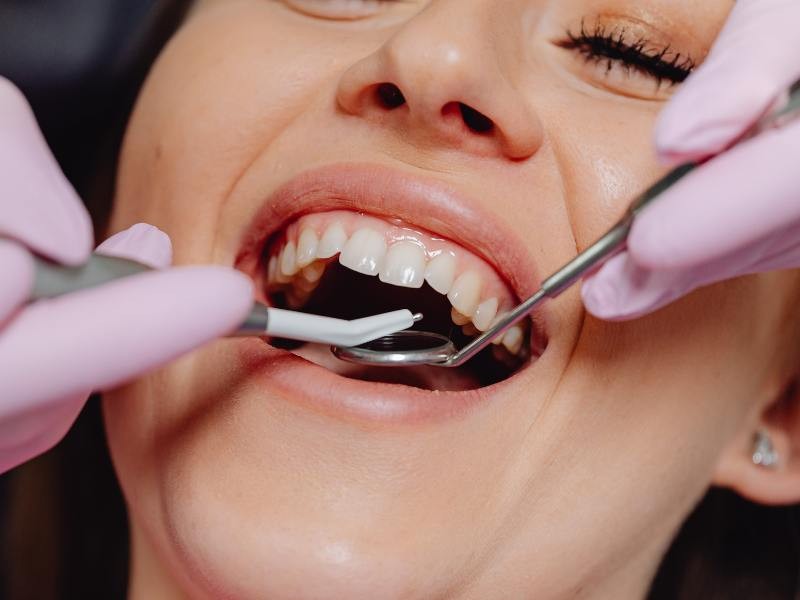
Maintaining a routine of dental visits goes far beyond just taking care of your smile. Regular check-ups play an important role in disease prevention, oral health maintenance and early identification of changes that often have no initial symptoms.:ContentReference [oaicite:0] {index=0}
Many people seek the dentist only when pain or discomfort arises. However, the absence of symptoms does not mean the absence of problems. Some oral diseases develop silently and can progress without obvious signs for a long time.:ContentReference [oaicite:1] {index=1}
At Alora Clínic , in Ramada, Odivelas, Lisbon, we value prevention and personalized follow-up to help our patients maintain a balanced oral health and a healthy smile throughout life.
1. Prevention remains the best treatment
Prevention allows you to identify changes before they become more complex problems.
Regular consultations help prevent:
- caries;
- gengivite;
- periodontal disease;
- tooth wear;
- other oral problems.
Early diagnosis means simpler and less invasive treatments.:ContentReference [oaicite:2] {index=2}
2. Reduce the fear of the dentist
Currently, dental medicine has evolved significantly.
Treatments have become more comfortable, fast and predictable.
Regular consultations help many people reduce anxiety and create greater confidence during treatments.:ContentReference [oaicite:3] {index=3}
3. Improve Self-Esteem
Smiling is strongly linked to self-esteem and personal confidence.
Maintaining healthy teeth and a harmonious smile can influence:
- well-being;
- trust;
- social life;
- quality of life.
Feeling good about your smile can have a positive impact on your daily life.:ContentReference [oaicite:4] {index=4}
4. Taking care of the general health of the body
Oral health and general health are interlinked.
Changes in the oral cavity can influence other areas of the body and affect general wellbeing.:ContentReference [oaicite:5] {index=5}
5. Reduce risks associated with cardiovascular health
Some studies suggest a relationship between certain oral problems and systemic changes.
Inflammatory processes and infections in the oral cavity can influence the body when not treated properly.:ContentReference [oaicite:6] {index=6}
6. Assist in the early detection of oral changes
Periodic consultations allow to identify changes in the initial stages.
Some lesions may arise through:
- lingering wounds;
- mucosal changes;
- bleeds;
- stains;
- other oral amendments.
Regular monitoring allows for proper observation and orientation.:ContentReference [oaicite:7] {index=7}
7. Identify causes of bad breath
Bad breath can have several causes.
In many cases, the origin is in the oral cavity itself.
Professional evaluation allows to identify possible associated factors and guide appropriate care.:ContentReference [oaicite:8] {index=8}
8. Perform professional cleanings
Brushing and flossing are essential, but they do not always completely remove the bacterial plaque accumulated in certain areas.
Professional cleaning helps:
- remove tartar;
- reduce biofilm;
- remove surface stains;
- maintain your health with your partner.
Even with good hygiene habits, professional follow-up is still important.:ContentReference [oaicite:9] {index=9}
9. Preserve natural teeth
Habits such as bruxism, biting nails or clenching teeth can cause wear and small fractures over time.
Regular monitoring allows early signs to be identified and appropriate preventive treatments.:ContentReference [oaicite:10] {index=10}
10. Know new technologies and treatments
Dental medicine is constantly evolving.
Currently there are several technologies that can provide more comfortable, fast and predictable treatments.
Regular consultations allow you to clarify doubts and learn about new therapeutic possibilities.:ContentReference [oaicite:11] {index=11}
11. Does the dentist only take care of the teeth?
No.
Dental monitoring can also contribute to the evaluation of:
- gingival problems;
- bruxism;
- sleep disturbances;
- snoring;
- headaches;
- facial pain;
- alterations of the temporomandibular joint.
Oral health involves much more than just the teeth.:ContentReference [oaicite:12] {index=12}
12. Conclusion
Regular visits to the dentist play a fundamental role in the prevention and maintenance of oral health.
The absence of pain does not necessarily mean the absence of problems.
Periodic consultations allow to identify changes early, carry out professional cleaning and maintain adequate follow-up over time.:ContentReference [oaicite:13] {index=13}
At Alora Clínic , in Ramada, Odivelas, Lisbon, we offer personalized monitoring, modern technology and a preventive approach focused on the oral health of our patients.
If you want to perform a check-up or clarify doubts about your oral health, you can schedule a consultation with our team.